Sony WH-1000XM6: Specs, Price, Pros & Cons
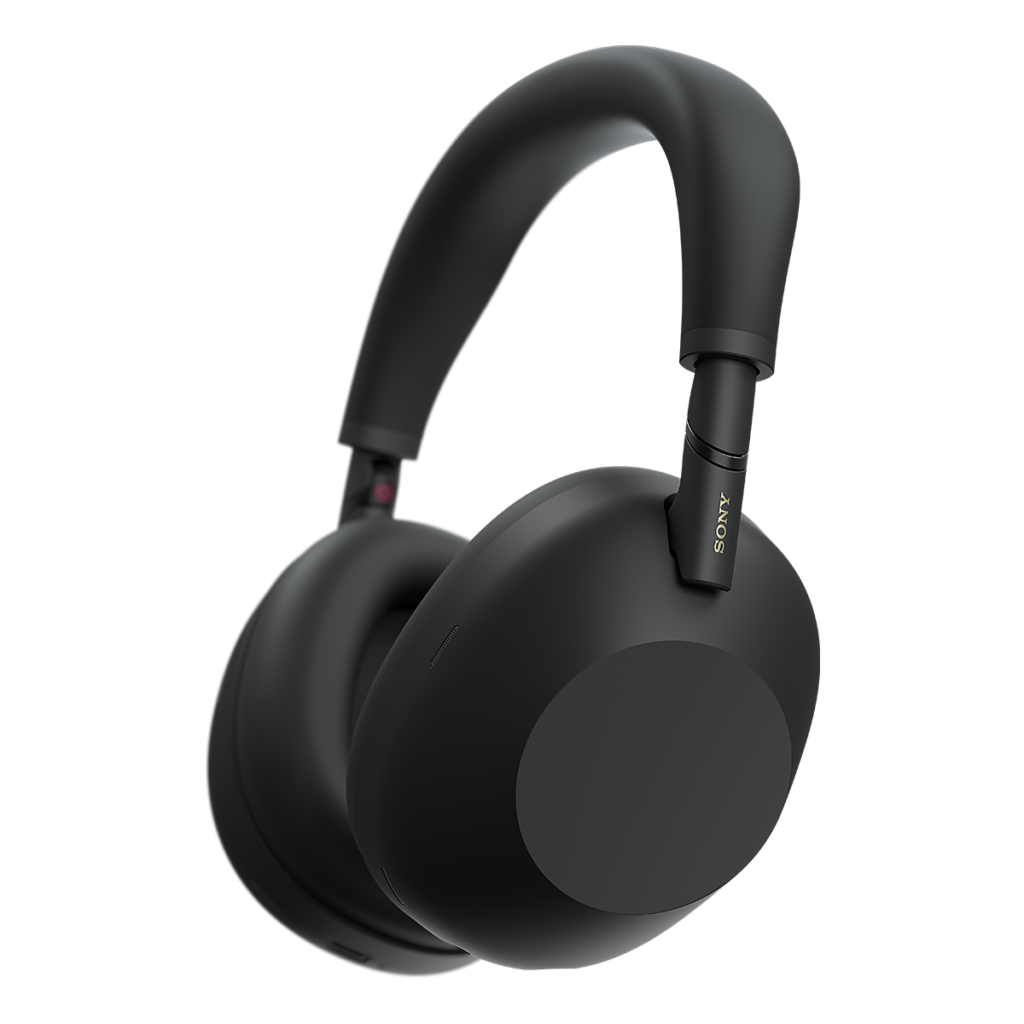
The WH-1000XM6 folds again. Its predecessor, the WH-1000XM5, gave up the collapsing hinge, an odd omission on a travel headphone, and Sony has brought it back with a folding mechanism made by metal injection molding. Sony also sized the compact case for bags and airplane seat pockets and gave it a magnetic latch.
Sony's new QN3 processor, which it rates at seven times the speed of the QN1 in the XM5, now manages 12 microphones. An Adaptive NC Optimizer tunes the canceling to outside noise, air pressure and the way the earcups sit, and Sony says it keeps working over glasses or under a hat. For calls, Sony describes a six-microphone beamforming system trained with AI to pick your voice out of background noise.
The 30 mm driver uses a carbon fiber dome. Sony says mastering engineers helped tune it. LDAC carries hi-res audio over Bluetooth, and the bundled 3.5 mm cable carries it by wire, which also keeps the music going when the battery is flat: switched off, the XM6 plays as ordinary passive headphones, only without noise canceling.
Bluetooth LE Audio is on the spec sheet too, with the LC3 codec, but Sony runs it as a separate mode. In the Sound Connect app it is the setting called Low latency, which appears only when the phone supports LE Audio, and while it is on the music travels over LC3 instead of LDAC. The factory setting favors sound quality and keeps LE Audio off, so a gamer has to go looking for it. Once it is on, a game that supports the GMAP gaming profile switches the headphones over automatically.
A proximity sensor in the left earcup pauses the music when you lift the headphones off and turns them off after 15 minutes unworn, and both behaviors can be changed in the app.
Category strengths
Where the Sony WH-1000XM6 beats the median
- Much longer battery life from the earbuds ?40 h vs 13 h (median)
- Has Hi-Res audio ?
- Much more treble extension ?40,000 Hz vs 22,000 Hz (median)
- Much deeper bass ?4 Hz vs 15 Hz (median)
- Has adaptive ANC ?
- Has touch controls ?
- Much longer battery life with ANC on ?30 h vs 20 h (median)
- More microphones ?12 vs 6 (median)
- More Bluetooth codecs ?
- Has low-latency mode ?
Where the Sony WH-1000XM6 trails the median
- Smaller audio drivers ?30 mm vs 38 mm (median)
- A heavier build ?254 g vs 213.5 g (median)
- A higher impedance ?48 Ω vs 38 Ω (median)
How this VS Score was computed
Score 83: each known spec is measured against the median of all headphones (97 products), then weighted. 86% of the scoreable weight could be used. See how we score
| Specification | This product | Cohort median | Score weight | Points moved |
|---|---|---|---|---|
| Active noise cancellation | Yes | 61% of the class have it | 2 | +100.0 |
| Battery life (earbuds) | 40 | 13 | 2 | +100.0 |
| Lowest frequency | 4 — capped at the class’s lower range (5) | 15 | 1 | +50.0 |
| Spatial audio | Yes | 55% of the class have it | 1 | +50.0 |
| Hi-Res audio | Yes | 43% of the class have it | 1 | +50.0 |
| Adaptive ANC | Yes | 50% of the class have it | 1 | +50.0 |
| Ambient sound mode | Yes | 67% of the class have it | 1 | +50.0 |
| Highest frequency | 40,000 | 22,000 | 1 | +41.0 |
| Customisable EQ app | Yes | 62% of the class have it | 0.5 | +25.0 |
| Voice assistant | Yes | 74% of the class have it | 0.5 | +25.0 |
| Touch controls | Yes | 38% of the class have it | 0.5 | +25.0 |
| In-ear detection | Yes | 53% of the class have it | 0.5 | +25.0 |
| Find my device | Yes | 53% of the class have it | 0.5 | +25.0 |
| Battery life (ANC on) | 30 | 20 | 1 | +25.0 |
| Multipoint pairing | Yes | 58% of the class have it | 0.5 | +25.0 |
| Driver size | 30 | 38 | 2 | −22.0 |
| Bluetooth codecs | 4 | 3 | 1 | +17.0 |
| USB-C charging | Yes | 73% of the class have it | 0.3 | +15.0 |
| Low-latency mode | Yes | 26% of the class have it | 0.3 | +15.0 |
| Wired connection option | Yes | 62% of the class have it | 0.3 | +15.0 |
| Foldable | Yes | 35% of the class have it | 0.3 | +15.0 |
| Microphones | 12 — capped at the class’s upper range (8) | 6 | 0.5 | +8.5 |
| Weight | 254 | 213.5 | 1 | −8.0 |
| Impedance | 48 | 38 | 0.5 | −5.0 |
| Bluetooth version | 5.3 | 5.3 | 1 | +0.0 |
| Type | Over-ear | Over-ear | 0.5 | +0.0 |
Not scored: Passive noise reduction (unknown: not scored); Battery life (with case) (unknown: not scored); Wireless charging case (unknown: not scored); Fast charging (standard for the class (80% have it)).
Editor’s note
Three minutes on a charger gives three hours of playback by Sony's count, but only from a USB Power Delivery adapter at 9 V. The cable in the box has a USB-A plug on one end, and Power Delivery runs over USB-C, so that figure depends on a charger and a cable you supply. A plain 5 V adapter turns the same three minutes into about an hour. Keep listening while it charges and the help guide says the battery stops filling at roughly 80 percent.
The 30-hour battery rating assumes AAC, SBC or LC3 with noise canceling on. Over LDAC, the codec that earns the hi-res badge, Sony's own table gives 26 hours, and it adds that the equalizer, DSEE Extreme upscaling and Speak-to-Chat all shorten that further. None of this makes the battery small. A return flight across the Atlantic, airport waits included, still fits inside the LDAC figure.
With a laptop and a phone both connected, calls on either one ring through the headphones, and music comes from whichever device played last. Connecting a third device keeps the one that last played music and drops the other. For a desk that mixes a work laptop and a personal phone, that is the behavior you want, and it takes no button presses once the app setting is on.
Specifications
Sound quality
Features
Battery
Connectivity
Comfort
Sources and verification
Where the specifications come from
- Official product pageelectronics.sony.com
- Datasheet or manualhelpguide.sony.net
Verification
- First published
- Specifications last checked
- Sheet completeness
- 32 of 36 specifications verified; the rest show as Unknown and are never estimated or scored
- Page type
- Product specification page — Compiled from the manufacturer’s published specifications and the cited sources; this is not a hands-on test.
- Basis
- Research-based: specifications and editorial text were compiled from the documents listed here and the manufacturer’s published data. We have not tested this unit ourselves; where independent measurements are mentioned they belong to the linked publication.
Where to buy
Prices and availability may change. Check the retailer before buying. We may earn a commission on purchases.
Price history
Headphones with similar specs to the Sony WH-1000XM6
Ratings & reviews
No reviews yet. Be the first to share your experience.
The bottom line
The Sony WH-1000XM6 earns a VS Score of 83, above the median of the 97 headphones it is measured against (a score of 50 is level with that median).
- Who it’s for
- Someone who flies or takes long train trips often and wants Sony's strongest noise canceling in a headphone that folds into a small case.
- Who should look elsewhere
- Anyone buying headphones for the gym or for running should look elsewhere: Sony's guide says the headset is not waterproof and warns against rain and sweat-soaked use.
- The trade-off that matters
- The gains over the XM5 are real but incremental, and Sony still sells that model for far less, so the XM6 earns its premium mainly for people who travel with it.
- The main alternative
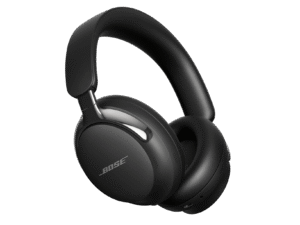
- Bose QuietComfort Ultra Headphones (2nd Gen): the closest rival at this level, and it ships with a USB-C to USB-C cable for lossless wired listening, which the XM6's charge-only port cannot do.
This page was created with the help of AI. How we work
Latest Headphones