VersusPilot

English
28 facts in comparison
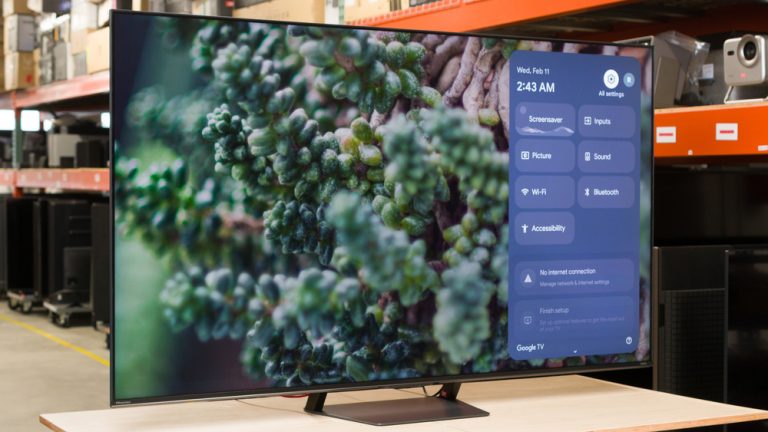
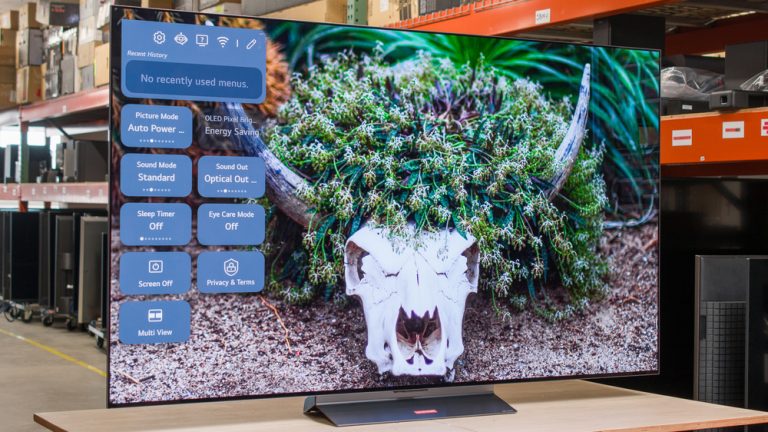
Hisense U7SG vs LG C5 OLED
Why is Hisense U7SG better than LG C5 OLED?
- 21 Hz more Refresh rate ?165 Hz vs 144 Hz
- 1,800 nits more Peak brightness ?3,000 nits vs 1,200 nits
- Has HDR10+ ?
- 3 ms less Input lag ?10 ms vs 13 ms
- Has Chromecast built-in ?
Why is LG C5 OLED better than Hisense U7SG?
- DCI-P3 coverage ?
- Speaker power ?
- 1 more USB ports ?3 vs 2
What matters to you?
Drag the sliders to weight each category and re-rank the products to suit your priorities.
Score breakdown
Picture
A larger screen is more immersive.
The vertical pixel count; higher is sharper (4K, 8K).
The panel technology (e.g. OLED, QLED, Mini-LED).
A higher refresh rate is smoother for sport and gaming.
Higher brightness makes HDR highlights pop.
More dimming zones improve contrast and black levels.
Wider DCI-P3 gamut coverage means more vivid, accurate HDR colour.
Support for more HDR formats means better contrast in more content.
Gaming
Carries 4K/120Hz and the latest gaming features.
Syncs the display to the game for tear-free motion.
Switches to game mode automatically.
Drives 4K at 120Hz for the smoothest console and PC gaming.
AMD FreeSync variable refresh rate for tear-free PC and console play.
Lower input lag feels more responsive when gaming.
Audio
Higher total speaker power fills larger rooms.
Adds spatial, three-dimensional audio in supported content.
Passes lossless audio to a soundbar or receiver over HDMI.
Smart features
The smart-TV platform (e.g. Google TV, webOS).
Control the TV and search by voice.
Stream from Apple devices to the TV.
Cast content from phones and laptops without a dongle.
The VESA wall-mount hole pattern (e.g. 300 x 300 mm).
Connectivity
More HDMI ports connect more devices.
More full-bandwidth HDMI 2.1 ports connect more 4K/120Hz sources.
USB ports for media playback and accessories.
The Wi-Fi generation supported; later is faster.
Pair wireless headphones or speakers.
A wired network port for stable streaming.
The bottom line
The Hisense U7SG is the clear winner, scoring 98 to 69 on our VS Score. It leads on Picture, Gaming and Smart features. The LG C5 OLED answers back with stronger Connectivity. Pick the Hisense U7SG unless Connectivity matters most to you — then the LG C5 OLED is the smarter buy.